
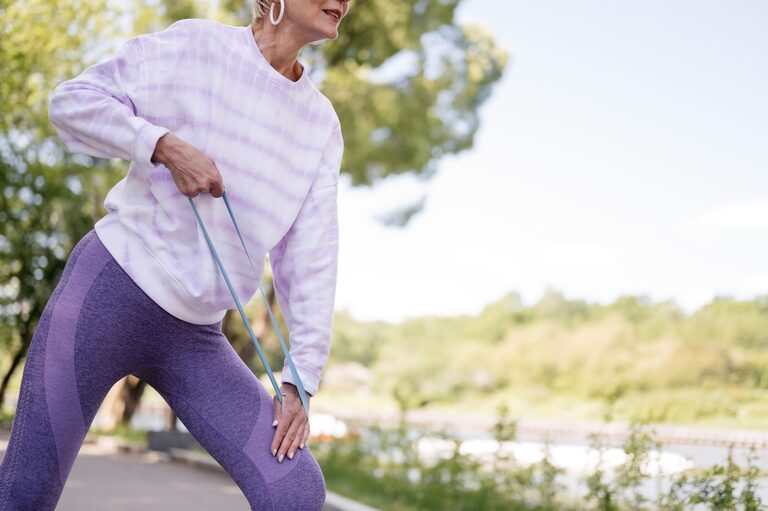
Good balance and mobility make everyday activities feel easier, from getting out of a chair to reaching for an item on a shelf. You do not need intense workouts or high-impact movements to improve these skills. Low-impact strength exercises can help you build control, stability, and confidence while placing less stress on your joints.
The routine below focuses on simple movements that can be done at home with little or no equipment. Move slowly, use steady support when needed, and focus on controlled form rather than speed.
Why Strength Supports Balance and Mobility
Balance is not just about standing on one foot. It depends on coordination between your muscles, joints, vision, and nervous system. Stronger muscles can help you maintain an upright position, control your steps, and respond more easily when your body shifts.
Mobility refers to how comfortably and freely you can move your joints. Strength exercises performed through a comfortable range of motion can support mobility by helping your muscles work smoothly around the hips, knees, ankles, shoulders, and spine.
Low-impact exercises are useful because they avoid jumping and hard landings. They can still challenge your muscles while keeping movements controlled and steady.
Getting Started Safely
Before exercising, clear enough space to move freely. Wear comfortable shoes with good traction, and keep a sturdy chair, countertop, or wall nearby for support.
Keep these tips in mind:
– Start with five to ten minutes of gentle movement.
– Use a chair or countertop for balance whenever needed.
– Move slowly and breathe naturally.
– Keep your movements smooth instead of forcing a stretch.
– Stop if you feel sharp pain, unusual dizziness, or sudden discomfort.
– Begin with fewer repetitions and add more gradually.
If you have an injury, a health condition, or concerns about starting a new exercise routine, ask a qualified professional for guidance.
1. Sit to Stand
The sit-to-stand exercise strengthens the hips, thighs, and core while practicing a movement used throughout the day.
How to do it
- Sit near the front of a sturdy chair with your feet about hip-width apart.
- Place your feet flat on the floor and lean slightly forward.
- Press through your feet to stand up.
- Pause briefly when standing tall.
- Slowly lower yourself back into the chair.
Try six to twelve repetitions. Keep your knees pointing in the same direction as your toes, and avoid dropping quickly into the seat. If the movement feels difficult, use your hands lightly on the chair or choose a higher seat.
2. Supported Heel Raises
Heel raises strengthen the calves and ankles, which play an important role in walking and maintaining steadiness.
How to do it
- Stand behind a chair or face a countertop.
- Place your hands lightly on the support.
- Slowly lift your heels so you rise onto the balls of your feet.
- Pause for one or two seconds.
- Lower your heels with control.
Complete eight to fifteen repetitions. Keep your body upright and avoid leaning forward. As your control improves, try pausing longer at the top of the movement.
3. Standing Leg Extensions
This exercise targets the muscles around the hips and can help you practice maintaining a stable standing position.
How to do it
- Stand behind a sturdy chair with both hands resting on it.
- Shift your weight onto one leg.
- Move the opposite leg straight back without arching your lower back.
- Pause briefly, then return the foot to the floor.
- Repeat on the other side.
Perform eight to twelve repetitions per leg. Keep the movement small and controlled. The goal is to engage the muscles around your hip, not to lift the leg as high as possible.
4. Side Leg Lifts
Side leg lifts strengthen the outer hips, which help support steadiness during walking and side-to-side movements.
How to do it
- Stand tall while holding a chair or countertop.
- Keep your toes facing forward.
- Slowly move one leg out to the side.
- Pause when you feel the outside of your hip working.
- Return the leg to the starting position.
Complete eight to twelve repetitions on each side. Keep your upper body upright and avoid swinging the leg. If you find yourself leaning, reduce the height of the lift.
5. Wall Push Ups
Wall push-ups strengthen the chest, shoulders, arms, and upper body without requiring you to get down on the floor.
How to do it
- Face a wall and stand about an arm’s length away.
- Place your palms on the wall at chest height.
- Bend your elbows as you bring your chest closer to the wall.
- Press through your hands to return to the starting position.
Try eight to twelve repetitions. Keep your body in a straight line from your head to your heels. To make the exercise easier, stand closer to the wall. To add a little challenge, step back slightly.
6. Marching in Place
Marching in place trains hip strength, coordination, and weight shifting. It also adds a gentle cardiovascular element to your routine.
How to do it
- Stand near a wall, chair, or countertop.
- Lift one foot a few inches from the floor.
- Lower it with control, then lift the other foot.
- Continue alternating sides at a comfortable pace.
March for 20 to 40 seconds. Keep your shoulders relaxed and your steps quiet. Use one or both hands for support if needed. As your balance improves, try using only one hand while keeping the support close.
7. Step Taps
Step taps help you practice shifting weight from one leg to the other, an important part of walking and changing direction.
How to do it
- Stand facing a low step, book, or other stable object.
- Keep one foot planted while gently tapping the top of the object with the opposite foot.
- Return the tapping foot to the floor.
- Alternate sides in a slow, steady rhythm.
Do eight to ten taps per side. Use a very low object, or simply tap the floor a short distance to the side if you prefer. Make sure the surface does not slide.
8. Supported Single Leg Balance
This exercise directly challenges balance while allowing you to use support.
How to do it
- Stand beside a countertop or sturdy chair.
- Place one hand on the support.
- Lift one foot slightly from the floor.
- Hold the position for five to fifteen seconds.
- Lower the foot and repeat on the other side.
Complete two or three rounds per leg. Keep your gaze focused on a fixed point ahead. Instead of trying to balance without support, aim for calm, controlled posture. You can gradually reduce how much pressure you place through your hand.
Creating a Simple Weekly Routine
Perform these exercises two or three times per week, allowing time between sessions for rest. A beginner-friendly routine might include:
– Sit to stands: 8 repetitions
– Heel raises: 10 repetitions
– Side leg lifts: 8 per side
– Wall push-ups: 8 repetitions
– Marching in place: 30 seconds
– Step taps: 8 per side
– Supported balance: 10 seconds per side
Repeat the routine once or twice, depending on your energy and experience. Over time, you can add a few repetitions, increase the balance hold, or reduce your reliance on support. Change only one part of the routine at a time so you can notice how your body responds.
Make Progress at Your Own Pace
Improving balance and mobility is a gradual process. Quality matters more than quantity, and small improvements can make a meaningful difference in daily movement. Keep the exercises comfortable, stay consistent, and celebrate better control rather than chasing difficult variations.
With regular practice, low-impact strength exercises can help you move with greater confidence, steadiness, and ease.